
 View menu
About VNK's
VNK's is committed to delivering high-quality products that meet the stringent demands of customers and the market, ensuring we uphold our initial promises.






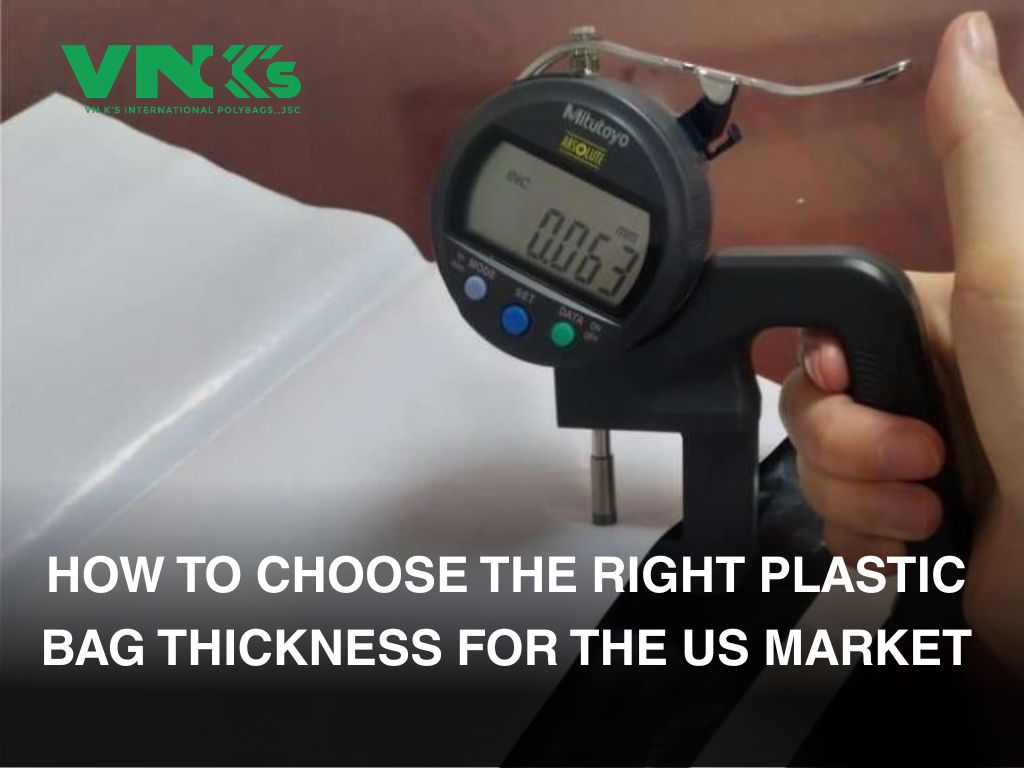




If you are sourcing plastic bags for the US market, one of the most overlooked yet critical factors is plastic bag thickness. Many importers assume that choosing a thicker bag automatically means better quality, while others focus on reducing cost by selecting thinner options. In reality, both approaches can lead to unnecessary losses. Understanding how plastic bag thickness works and how it directly impacts cost, performance, and customer satisfaction is essential if you want to make smarter sourcing decisions.
For many importers and distributors in the US market, sourcing plastic bags seems straightforward until problems start to appear. Some orders arrive stronger than needed, pushing costs unnecessarily high. Others fail during actual use, leading to customer complaints or even product returns. In most cases, the root cause is simple: choosing the wrong plastic bag thickness.
Understanding plastic bag thickness is not about becoming technical. It is about making the right decision for your product, your customers, and your cost structure. If you get it right, you balance performance and price. If you get it wrong, you either overpay or risk quality issues.
Here are some things you need to know to help you make an assessment:
One of the most common points of confusion when discussing plastic bag thickness is the difference between mil and micron. In the US, thickness is typically measured in mil, while many overseas manufacturers use micron. This difference alone can create misunderstandings during sourcing.

The difference between two measurement of thickness
To simplify, 1 mil equals 25.4 microns. That means a 2 mil bag is approximately 50 microns. While the conversion itself is simple, the key takeaway for buyers is consistency. Always confirm the unit being used and ensure both sides are aligned before finalizing specifications.
You do not need to go deep into technical details. What matters is knowing the approximate thickness level you need and verifying it with your supplier.
Read more: Why thick plastic bags still winning in the US market? What do you need to know about this?
Different applications in the US require different thickness levels, and understanding these typical ranges helps you avoid over- or under-specifying your product.
For retail shopping bags, thickness often ranges from around 1.5 to 2.5 mil. These bags need to balance cost and durability while still providing a good customer experience. For grocery applications, especially where heavier items are involved, thickness may increase to around 2 to 3 mil to ensure strength and reliability.
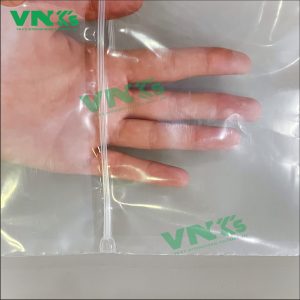
For heavy duty plastic bags, such as those used for bulk items or takeaway with heavier loads, thickness can go beyond 3 mil. These bags are designed for repeated use and must handle more demanding conditions. These are not strict rules, but they provide a useful reference point when discussing requirements with your supplier.
Choosing the right plastic bag thickness should always be based on actual usage rather than assumptions. One of the most important factors to consider is load capacity. How much weight will the bag typically carry? A bag designed for light retail items does not need the same thickness as one used for groceries or takeaway meals.
Another key factor is usage frequency. If the bag is intended for single use, a lower thickness may be acceptable. However, if your target market expects reusable plastic bags in the USA, then durability becomes more important, and a higher thickness is required.
It is also important to consider customer expectations. In many parts of the US, consumers are used to thicker, more durable bags due to local regulations and sustainability trends. Choosing a thickness that feels “too thin” can negatively impact your brand perception, even if the bag technically performs its function.
The goal is not to choose the thickest option available, but to choose the most appropriate one.
Read more: If you’re looking for a supplier in Vietnam, what should you keep in mind? Read on.
Choosing the right plastic bag thickness is not about technical complexity — it is about making smarter sourcing decisions. By understanding how thickness relates to usage, cost, and customer expectations, importers can avoid unnecessary expenses while maintaining product quality.
At VNK’s, we work closely with our clients to recommend the most suitable plastic bag thickness based on real use cases in the US market. From material selection to sample testing and production control, our goal is to help you achieve the right balance between cost efficiency and performance.

Read more: Read on this link and find out why VNK’s is a partner you can truly trust right here!
If you are sourcing plastic bags for the US market, choosing the right thickness is one of the most important decisions you can make — and the right partner can make that decision much easier.

The optimal solution for your order at the most competitive price.