
 View menu
About VNK's
VNK's is committed to delivering high-quality products that meet the stringent demands of customers and the market, ensuring we uphold our initial promises.






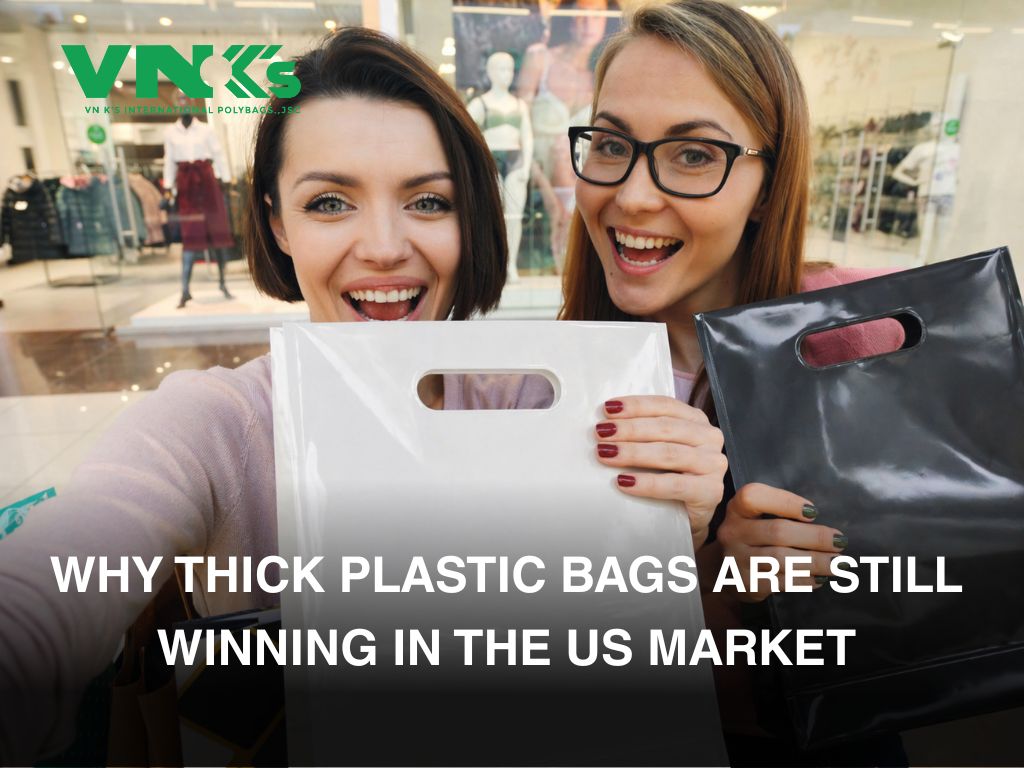




The conversation around plastic bags in the US market is often dominated by sustainability concerns, leading many to assume that plastic is gradually disappearing. However, for importers and distributors who are closely following real demand, the picture is quite different. Plastic is not being eliminated — it is being redefined. In particular, thick plastic bags are emerging as a practical solution that aligns both with regulatory trends and market needs. As demand for thick plastic bags continues to evolve in the US, understanding this shift is essential for anyone sourcing or supplying packaging products today.
Read more: Are you looking for a plastic bag manufacturer in Vietnam? Here’s what US importers need to know.
In recent years, conversations around sustainability have led many to believe that plastic is being completely phased out, especially in developed markets like the United States. Headlines about bans and environmental policies often reinforce the idea that plastic bags are becoming obsolete. However, when looking at actual market behavior, the reality is more nuanced. Demand has not disappeared — it has evolved.
Instead of eliminating plastic altogether, the US market is shifting toward more responsible usage. This means replacing low-quality, single-use plastic bags with thicker, more durable alternatives that can be reused multiple times. For importers and traders, this shift is not a threat but an opportunity to adapt product offerings to meet new expectations.
Many US states, including California and New York, have implemented regulations targeting single-use plastic bags. These policies often focus on banning or charging for lightweight bags that are easily discarded after one use. However, it is important to note that these regulations do not eliminate plastic entirely. Instead, they encourage the use of reusable plastic bags with higher thickness and durability.
As a result, there has been a clear transition in demand. Retailers and distributors are increasingly sourcing thick plastic bags that meet minimum thickness requirements and can withstand repeated use. These bags are often classified as reusable plastic bags in the USA, making them compliant with local regulations while still maintaining the convenience of plastic.
Read more: A more detailed answer to this question can be found here.
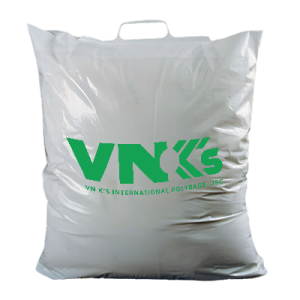
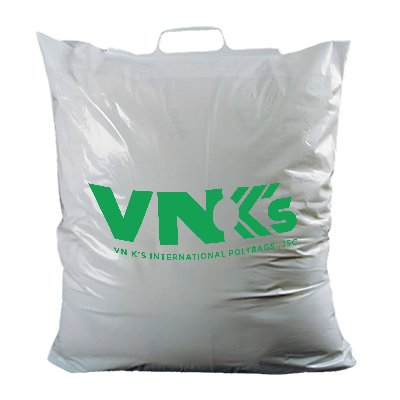
Thick plastic bags continue to be a practical solution for many businesses because they strike a balance between functionality, cost, and sustainability. From a performance standpoint, heavy duty plastic bags offer significantly higher strength, allowing customers to reuse them multiple times without tearing. This durability directly aligns with environmental goals by reducing overall consumption.
From a cost perspective, thick plastic bags can still be more economical than paper alternatives in many scenarios. Paper bags often require higher material usage and may not perform as well in wet conditions or when carrying heavier items. In contrast, durable plastic shopping bags provide consistent performance across various use cases.
Additionally, plastic remains a superior material for printing and branding. Smooth surfaces and flexibility allow for high-quality customization, enabling retailers to enhance brand visibility while maintaining product functionality.
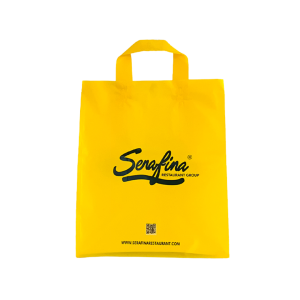
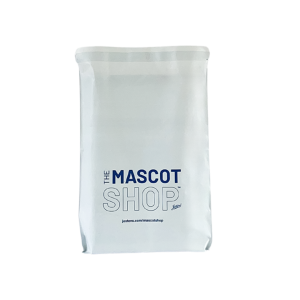
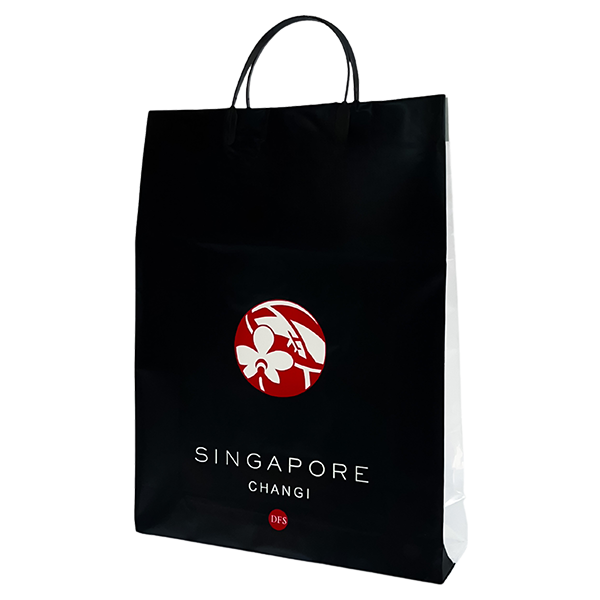
In the US, thick plastic bags are widely used across multiple industries. Retail stores rely on them for packaging purchased goods, ensuring both durability and a professional appearance. Grocery chains also use heavy duty plastic bags to handle bulk items and heavier loads, especially in regions where reusable bags are encouraged.
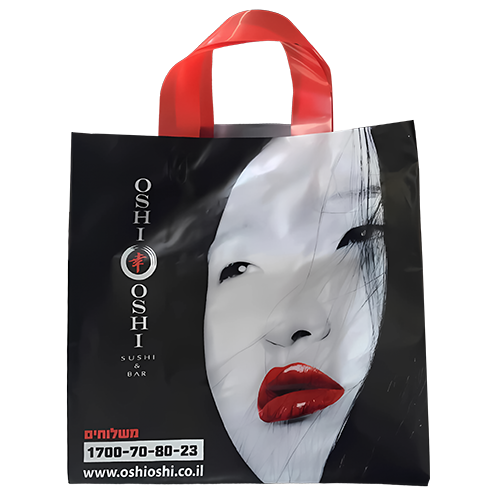
Takeaway and food service businesses also benefit from thicker plastic bags, as they offer better resistance to leakage and tearing. This is particularly important for maintaining customer satisfaction during transportation. Across these applications, the common requirement is clear: bags must be strong, reliable, and reusable.
For importers looking to enter or expand in the US market, understanding technical specifications is essential. Thickness is one of the most critical factors, typically measured in mil or micron depending on supplier standards. Ensuring compliance with local regulations requires selecting the appropriate thickness level.
Material choice also plays a key role. HDPE is often preferred for its strength and cost efficiency, while LDPE offers greater flexibility and a premium feel. Depending on the target application, selecting the right material can significantly impact product performance and customer perception.
In conclusion, the narrative that plastic is disappearing from the US market is misleading. What is actually happening is a transformation toward better, more sustainable plastic solutions. Thick plastic bags represent this evolution by combining durability, reusability, and cost efficiency.
For importers and distributors, success lies in recognizing this shift and aligning sourcing strategies accordingly. Choosing the right manufacturing partner is crucial to ensuring product quality, compliance, and long-term competitiveness.
Read on this link and find out why VNK’s is a partner you can truly trust right here!
At VNK’s, we provide high-quality thick plastic bags tailored to meet US market requirements. From material selection to customization and quality control, our solutions are designed to help you stay ahead in a changing market.

15 /Aug
18 /Jul
22 /Apr
The optimal solution for your order at the most competitive price.