
 View menu
About VNK's
VNK's is committed to delivering high-quality products that meet the stringent demands of customers and the market, ensuring we uphold our initial promises.






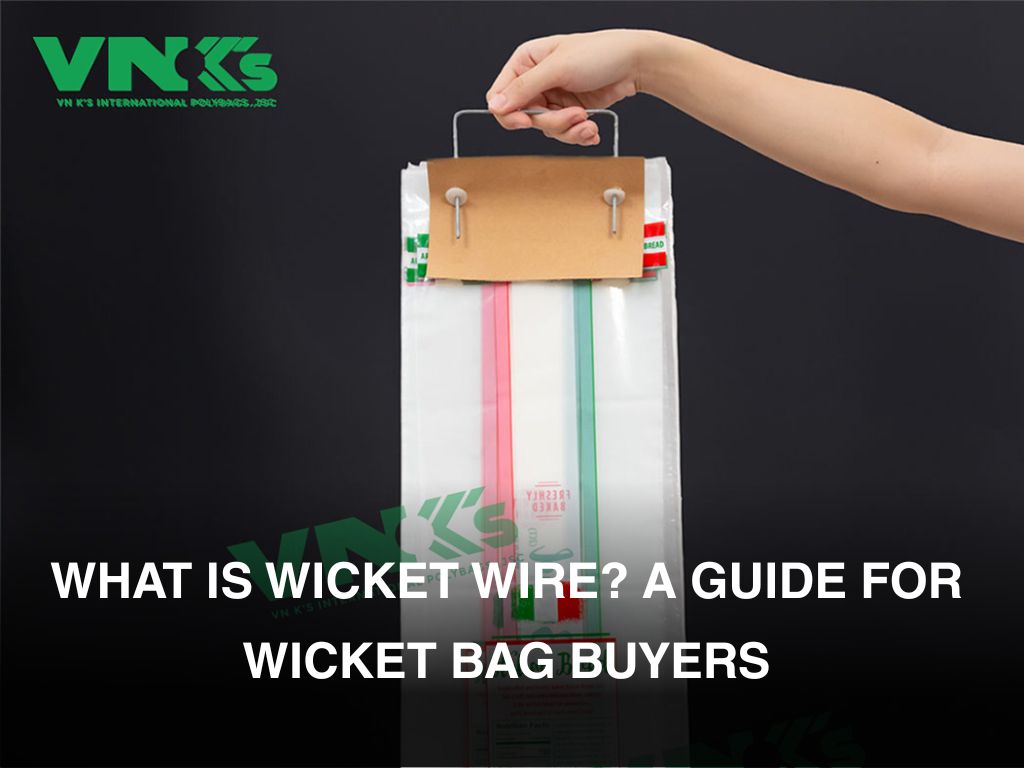




Wicket wire is a small component, but it directly affects how a stack of wicketed bags is held, mounted at a packing station and presented one bag at a time. If the wire does not match the holes in the bags or the intended equipment, the stack may be difficult to load, sit out of alignment or release incorrectly.
Buyers therefore need to understand both what wicket wire does and which wire, bag and machine dimensions must be confirmed together before production.
Wicket wire is a formed metal frame used to hold a stack of pre-punched plastic bags. A common construction has a crosspiece and two parallel legs that pass through two holes in the extended lip of each bag. This keeps the bags arranged as an orderly, aligned stack.
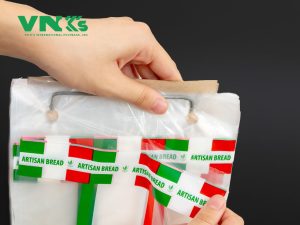
The stack may be used at a manual packing station or mounted on semi-automatic or automatic equipment. The wire carries the bag stack. It is not the bag seal, closure or tear-off feature, but it must work with those elements correctly.
VNK’s directly manufactures wicket wire from galvanized wire. Standard diameters are typically 2 mm or 3 mm. Larger diameters can be discussed according to project requirements. The final configuration still depends on the bag holes, total stack thickness and packing equipment.
A wicketed bag usually has an open mouth and an extended lip with two pre-punched holes. Multiple bags are aligned and loaded onto the two legs of the wire. Depending on the configuration, washers or supporting boards may be used to limit movement during transport and loading.
At a manual packing station, the operator opens the front bag, inserts the product and removes the bag through the approved release construction. On a packing line, the equipment may open one bag, insert the product and transfer the filled bag to the next operation. The exact sequence depends on the machine and bag design.
Wicket wire performs three main functions:
– Stack alignment: The wire holds the punched lips in a stable position.
– Controlled bag presentation: It keeps the stack where the operator or machine expects to find the next bag.
– Easier stack handling: A prepared group of bags can be moved and mounted as one unit.
The wire cannot compensate for an unsuitable bag specification. Incorrect hole positions, an incompatible lip, excessive stack thickness or the wrong release construction may still cause feeding problems. Buyers should therefore approve the wicket bag and wicket wire as one connected system.
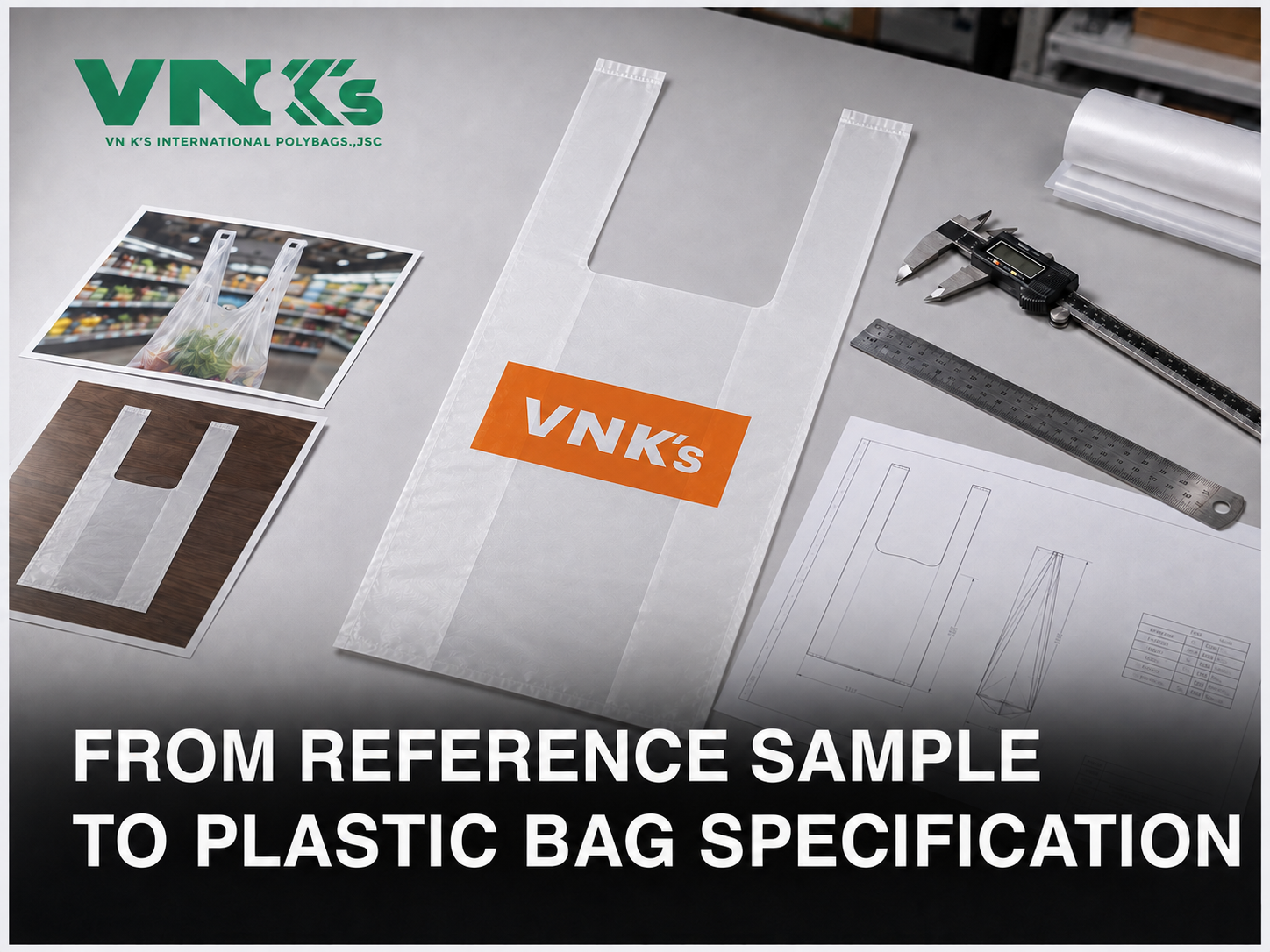
A description such as “5-inch wicket” may be incomplete because different parties may use different measurement points. A drawing with arrows, units and reference points provides clearer production information.
The main specification fields normally include:
| Specification field | What it controls |
|---|---|
| Crosspiece width | The distance between the two legs and its relationship with the bag holes |
| Leg length | The available length for holding the bag stack and mounting it in the equipment |
| Wire diameter | Clearance through the bag holes and the rigidity of the wire |
| Leg geometry | Leg alignment, length and end design |
| Material and surface | The required wire construction |
| Retention method | How movement of the bag stack is limited |
VNK’s uses galvanized wire, with standard diameters typically of 2 mm or 3 mm. A larger diameter can be reviewed when requested. The drawing should also show the orientation of the wicket because terms such as width, height, crosspiece and leg length can be interpreted differently without a diagram.
The wicket wire, the two bag holes and the wicket lip form a mechanical interface. Changing one element may affect the compatibility of the others.
Hole spacing and wire span
The center-to-center distance between the two holes must match the positions of the two wire legs. Otherwise, the bags may not fit onto the wire or may become distorted. The holes should also be positioned consistently relative to the bag centerline to prevent the stack from sitting to one side.
Hole diameter and wire diameter
The bag holes need suitable clearance around the wire. Insufficient clearance may create resistance when the bags are loaded or released. Excessive clearance may allow more stack movement than intended. There is no single clearance value for every application, so it should be evaluated against the actual bag and equipment.
Wicket lip and release construction
The lip is the section of film containing the two wicket holes. Its height, hole position and release construction affect how the bag remains on the wire and separates during use. A reference sample is useful when a buyer wants to maintain an existing operating configuration.
Stack thickness and bags per wicket
The number of bags on one wire should be considered together with film thickness, gussets and overlapping layers around the lip. The same number of bags can create different total stack thicknesses. An oversized stack may be more difficult to mount and feed.
Packing-machine interface
The equipment may require a particular mounting position, wire-leg spacing or stack orientation. A machine model, approved drawing or physical sample helps connect the bag specification to the actual line. Compatibility should be confirmed through samples and an agreed trial instead of relying only on a general wicket size.
Buyers do not need to know every technical detail before contacting VNK’s. An initial RFQ can contain the available information, while missing fields can be marked “to be confirmed” for further review instead of being filled with unsupported assumptions.
A buyer can begin with the following RFQ format:
| RFQ field | Information to provide |
|---|---|
| Packing application | Product being packed and manual, semi-automatic or automatic operation |
| Packing machine | Manufacturer and model, or “to be confirmed” |
| Bag dimensions | Width × length, plus gusset dimensions where applicable |
| Bag material and thickness | Required values or information from the existing bag |
| Hole spacing | Center-to-center distance between the two wicket holes |
| Hole diameter | Measured value or “to be confirmed from sample” |
| Wicket wire dimensions | Crosspiece width and leg length shown on a dimensioned drawing |
| Wire diameter | 2 mm, 3 mm or a larger requested diameter for review |
| Bags per wicket | Required stack count or “to be confirmed” |
| Retention and packing | Washers, supporting boards or another required arrangement |
| Printing | Number of colors, printed sides and artwork status |
| Reference | Existing drawing, clear photographs or a physical sample |
| Order quantity | Estimated quantity and ordering unit |
VNK’s sales team can review the initial information and identify details that still need clarification. If the buyer does not have a complete specification, reference images or a physical sample can support project analysis and specification discussion.
The final specification should connect the wicket wire drawing, bag drawing, hole pattern, bags per wicket and packing orientation. These records are also valuable for repeat orders because they reduce reliance on unclear descriptions such as “use the same standard wicket as before.”
VNK’s is a plastic bag manufacturer in Vietnam with nearly 20 years of experience in plastic bag manufacturing. We support OEM and custom plastic bag projects and directly manufacture wicket wire from galvanized wire. Buyers can send the available RFQ information or contact VNK’s with a reference sample for review.

The optimal solution for your order at the most competitive price.