
 View menu
About VNK's
VNK's is committed to delivering high-quality products that meet the stringent demands of customers and the market, ensuring we uphold our initial promises.




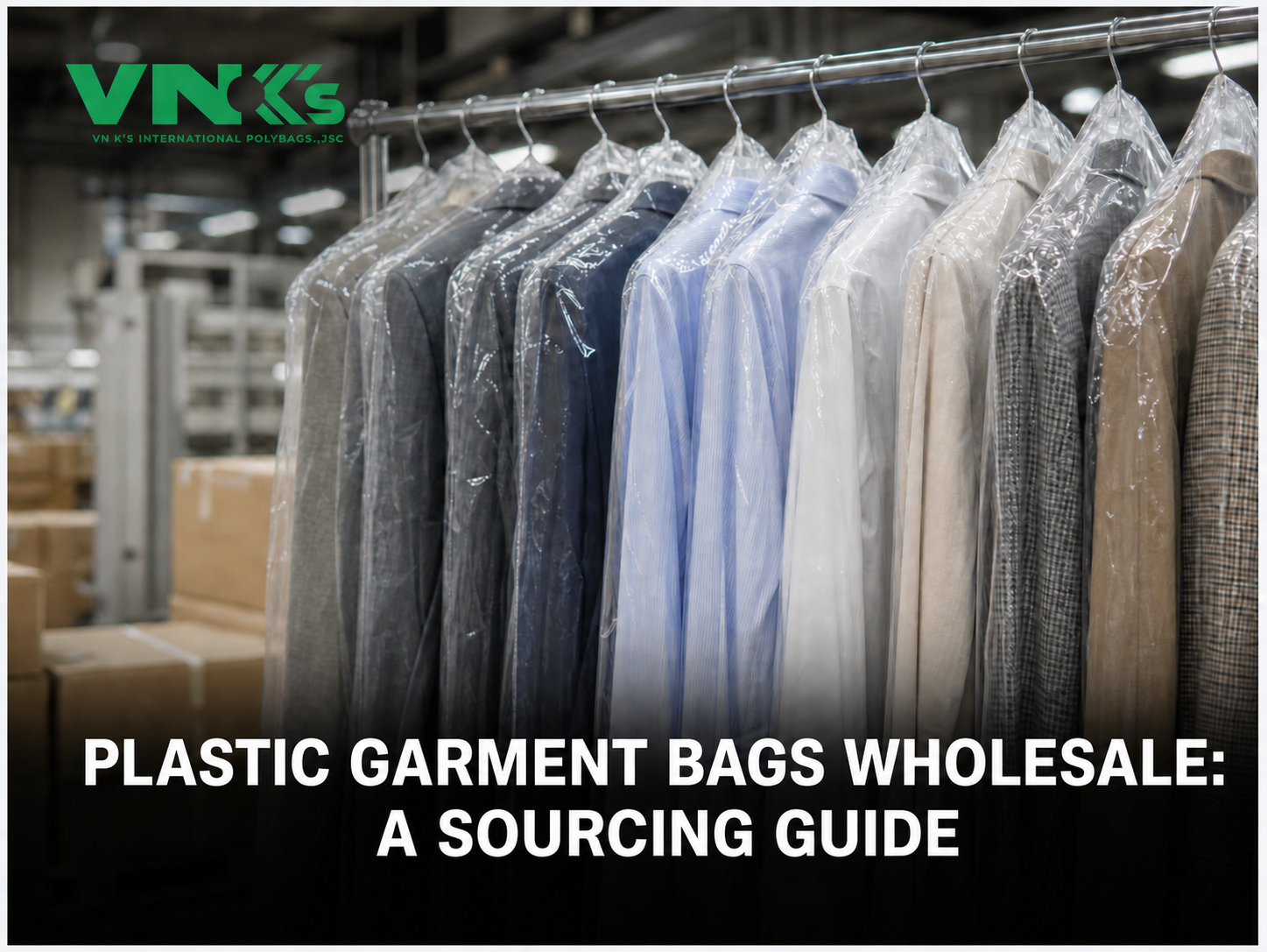




Two garment bag quotations may show a similar price per roll while representing different costs in use. Variations in cover length, film thickness, gusset, bag count and winding format can make the prices impossible to compare directly.
Sourcing plastic garment bags wholesale should therefore begin with a controlled specification. The objective is to obtain the right number of usable covers, consistent fit and reliable dispensing for the intended operation.
This guide focuses on lightweight plastic covers placed over garments on hangers and supplied on perforated rolls or as continuous film.
The term can also describe reusable zippered covers or small poly bags for folded clothing. Those are different products. A clear RFQ should state the application and include a photograph, drawing or approved sample.
Before contacting a plastic garment bag supplier, define:
– the garments being covered, such as shirts, suits, coats or dresses;
– whether one or several garments will be placed under each cover;
– whether the bag must be transparent, opaque or custom printed;
– whether covers will be dispensed manually or through a bagging station;
– how finished rolls must be packed, stored and handled.
These details shape nearly every other specification.
Labels such as “shirt size” and “coat size” are useful for browsing a catalog, but they are not precise enough for OEM purchasing. Two suppliers may use the same label for different dimensions.
State the cover width, open width or gusset depth, and total length in millimetres or inches. Also define the shoulder profile and hanger opening. A cover that is too narrow can catch on the garment or slow the operator. Excess width and length add material without necessarily improving protection.
Test the shortest, longest and bulkiest garments in the program rather than approving the cover with one easy-fitting sample. If several garments share one cover, include the maximum bundle depth.
Thickness affects material use and handling, but it is not a complete measure of quality. Film formulation, consistency and bag geometry also affect performance. The lowest gauge may not deliver the lowest total cost if it creates handling waste.
The RFQ should state:
– film type or an agreed performance requirement;
– nominal thickness in a shared unit;
– acceptable thickness tolerance;
– required transparency, opacity or surface appearance;
– any buyer-defined tensile, tear, friction or optical test method;
– the approved reference sample.
Recognized industry methods are available for measuring plastic-film thickness, tensile properties, tear, friction and transparency. Buyers should select only measurements related to a real failure risk and require suppliers to use the same method.
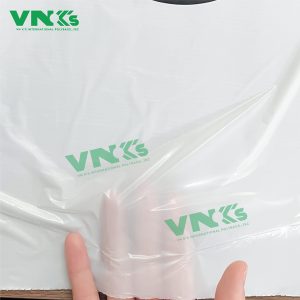 Quality inspection
For garment bags on a roll, the roll is part of the operating system.
Important variables include the number of covers per roll, perforation pitch, tear direction, roll width, core size, winding direction, maximum roll diameter and finished roll weight. A perforation that is difficult to separate can slow packing or cause covers to tear in the wrong place. Loose or uneven winding can make a roll difficult to mount and dispense.
Do not compare roll price alone. Normalize each quotation to **cost per 1,000 usable covers**, confirm the bag count, then consider changeover frequency and expected waste. A cheaper roll may be less economical if it contains fewer covers or causes more interruptions.
For a fair comparison, ask every supplier to quote the same:
1. cover dimensions and thickness;
2. covers per roll and roll net weight;
3. core dimensions and winding direction;
4. perforation and hanger-opening configuration;
5. roll and carton packing format.
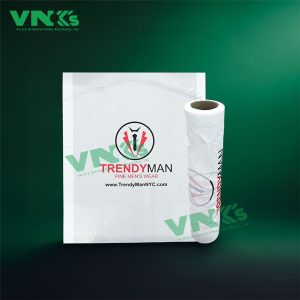 Garment bags on a roll
Plastic garment covers may carry a logo, handling information, identification marks or a suffocation warning. Do not ask a supplier to copy warning artwork from an unrelated product or market.
Requirements can vary by destination, bag dimensions, thickness and intended application. Some jurisdictions also treat laundry and garment bags differently from checkout bags. The buyer should identify the destination market, provide the required wording and confirm the latest legal requirements with an appropriate compliance adviser.
Artwork approval should control the text, language, type size, position, repeat interval, color and orientation – and identify who is responsible for regulatory review. Material choice alone does not establish compliance.
An RFQ does not need to begin as a long technical document. It can start with the key information already known and clearly mark the remaining items for confirmation.
Subject: RFQ – white polyethylene garment bags
– Product: Garment bags / garment film
– Size:21″ x 4″ x 54″ (approximately 53.3 x 10.2 x 137.2 cm)
– Material: White polyethylene film
– Thickness: 25 microns
– Printing:Two colors – red and black – on one side
– Packaging:Perforated on rolls, 300 bags per roll
– Quotation quantities: 50,000; 100,000; and 200,000 bags
This is enough for a supplier to understand the basic product and prepare an initial review.
The three quantity breaks should be quoted against the same confirmed specification. This lets the buyer see how volume affects cost without accidentally comparing different film, printing or packing assumptions. Each quotation should show the price per 1,000 bags, total bags, number of rolls, roll count, carton configuration and any one-time setup charges separately.
A garment cover should be evaluated in the workflow where it will be used. Load the roll onto the intended dispenser if possible, separate multiple covers, cover representative garments and check the finished pack.
Record the result instead of relying on comments such as “looks good.” A practical approval checklist can include:
– finished width, open width and length;
– thickness and appearance;
– hanger-hole position and shoulder profile;
– perforation location and separation behavior;
– roll winding and core fit;
– actual covers per roll;
– print position, repeat and readability;
– roll label, carton quantity and packing condition.
Keep the approved sample, signed specification and artwork revision under one reference to reduce the risk of using an outdated drawing on a repeat order.
VNK’s is a plastic bag manufacturer in Vietnam with nearly 20 years of experience in plastic bag manufacturing. We support OEM and custom plastic bag manufacturing based on project specifications. If you are developing a garment-cover program, send us the intended use, dimensions, film requirements, roll format, printing and destination market. Our team can review the request and discuss whether it is suitable for development.

The optimal solution for your order at the most competitive price.