
 View menu
About VNK's
VNK's is committed to delivering high-quality products that meet the stringent demands of customers and the market, ensuring we uphold our initial promises.




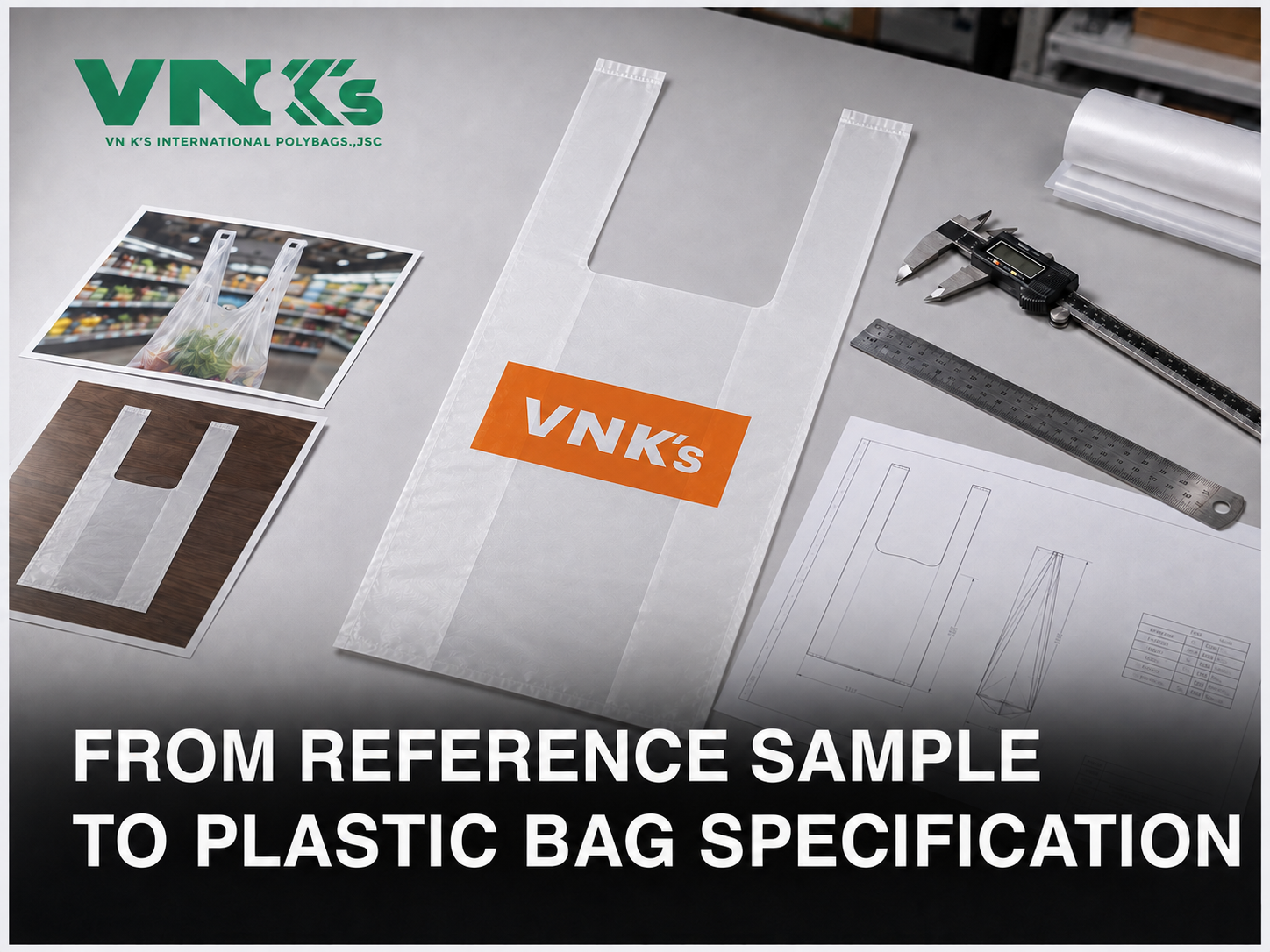




You do not need to be highly technical to start a custom plastic bag project. If you do not have a complete drawing or specification, you can provide the basic information available and include reference images or a physical sample.
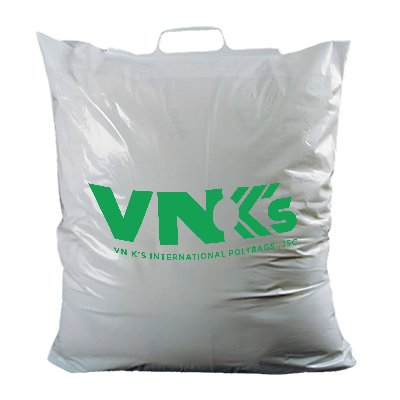
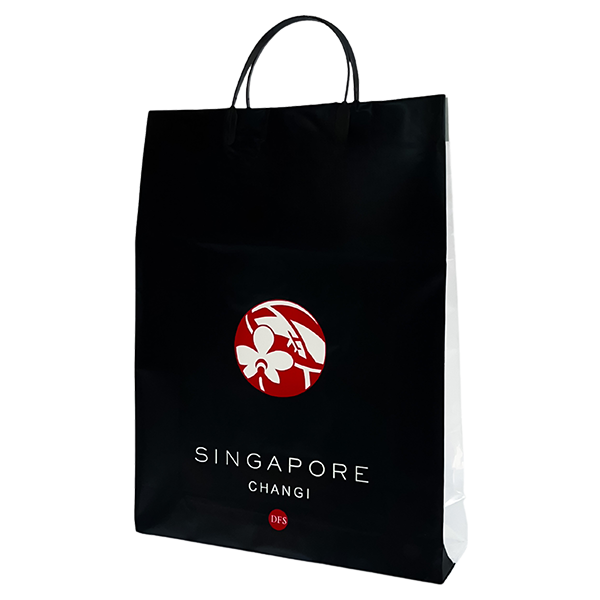
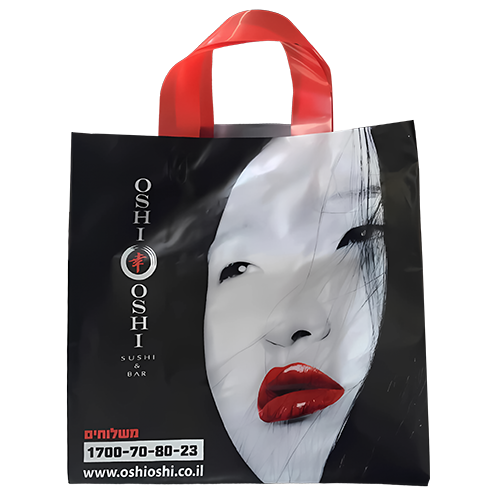
In plastic bag sample development, images help both parties understand the initial product concept, while a physical sample allows more details to be reviewed directly. However, either type of reference must still be converted into a clear set of confirmed inputs before production.
An initial enquiry may contain only seven groups of information:
– Size
– Thickness
– Material
– Printing
– Packaging
– Quantity
– Reference images, if available
You do not have to know every answer with certainty. State which requirements are confirmed, which options you are considering and which details remain unknown. VNK’s can review the information you provide and identify missing points or items that require further confirmation before production.
You do not need a complete specification to get started
The initial information can be reviewed at two levels. The first is a basic assessment of whether the project is suitable for the factory’s manufacturing capabilities. The second is a more detailed technical review to complete the production inputs required for the order. Buyers can also learn more about VNK’s production process and factory before discussing the project.
Tell VNK’s how the bag will be used, which specifications must remain unchanged, which ones may be adjusted and how much variation is acceptable. This context helps the team understand the boundaries of the project instead of treating every visible feature as fixed.
A clear set of images can make the initial factory review more efficient and reduce unnecessary exchanges. Images can help identify visible details such as:
– The general bag style and shape
– The handle, opening, flap, seal or visible gusset structure
– The apparent color, transparency and surface appearance
– The relative position of the printed design
– The visible number of print sides and colors
– The folding, bundling or packing arrangement when shown clearly
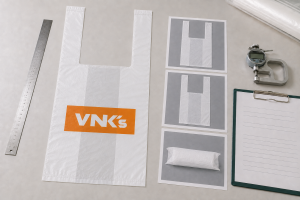
Measurements and drawing used to develop a custom plastic bag specification
Buyers should provide clear front and back views with as much visible detail as possible. An additional photograph of the fully opened bag placed next to a ruler is more useful than a photograph of a folded bag.
With this level of visual information, VNK’s can identify approximately 90% of the bag’s technical details and develop a much clearer understanding of the order.
Images also have clear limitations. They can help VNK’s determine whether a project appears suitable for the factory, but they cannot reliably confirm:
– Exact dimensions without a scale and an agreed measurement convention
– Film thickness
– Polymer type or material formulation
– Recycled content percentage
– Additives or surface treatment
– Dimensional, thickness or print-position tolerances
– Seal strength, load capacity, tear resistance or puncture resistance
– Compliance requirements for a specific market or application
Film length, width and thickness must be measured using an agreed method. For example, width may refer to the bag’s layflat width, open width or a measurement that includes a gusset. Two parties can use the same number while interpreting the bag structure differently.
A bag that appears thick or stiff in a photograph may not actually use a thicker film. Its appearance and handling can also be affected by the material, structure and geometry. The sales review must therefore separate visual observations from specifications that still require confirmation.
A physical sample is useful when a buyer wants to replace an existing product or describe a structure that is difficult to show in photographs. It allows the parties to discuss the shape, folds, seals, gussets, print layout and packing configuration in more detail.
However, one sample does not establish the production tolerances of an entire batch. It also does not automatically confirm the original material formulation, recycled content percentage, additives or regulatory requirements. Sending a sample to VNK’s provides a basis for project analysis and specification discussion. It is not a guarantee of reverse engineering or exact replication under every condition.
When sending a custom plastic bag sample, identify the project and provide:
– The details that must remain unchanged or may be adjusted
– The intended application
– The quantity required for quotation
– The destination market
– Any artwork or packing documents
If the project involves an existing product type, buyers can also review VNK’s current plastic bag product range before sending the sample.
One practical way to avoid misunderstandings is to assign every specification field to one of four statuses.
| Status | Meaning | Example |
|---|---|---|
| Confirmed by the buyer | A requirement supplied by the buyer and intended to remain fixed | Quantity, target dimensions, number of print colors |
| Observed from the reference | A visible feature that is not automatically the final requirement | Handle type, logo position, folding method |
| Proposed for confirmation | An option suggested after the review | Dimensional convention, packing structure, thickness option |
| Approved | The final value used for the project | Specification, artwork and corresponding revision |
“Looks like the sample” does not mean “confirmed.”
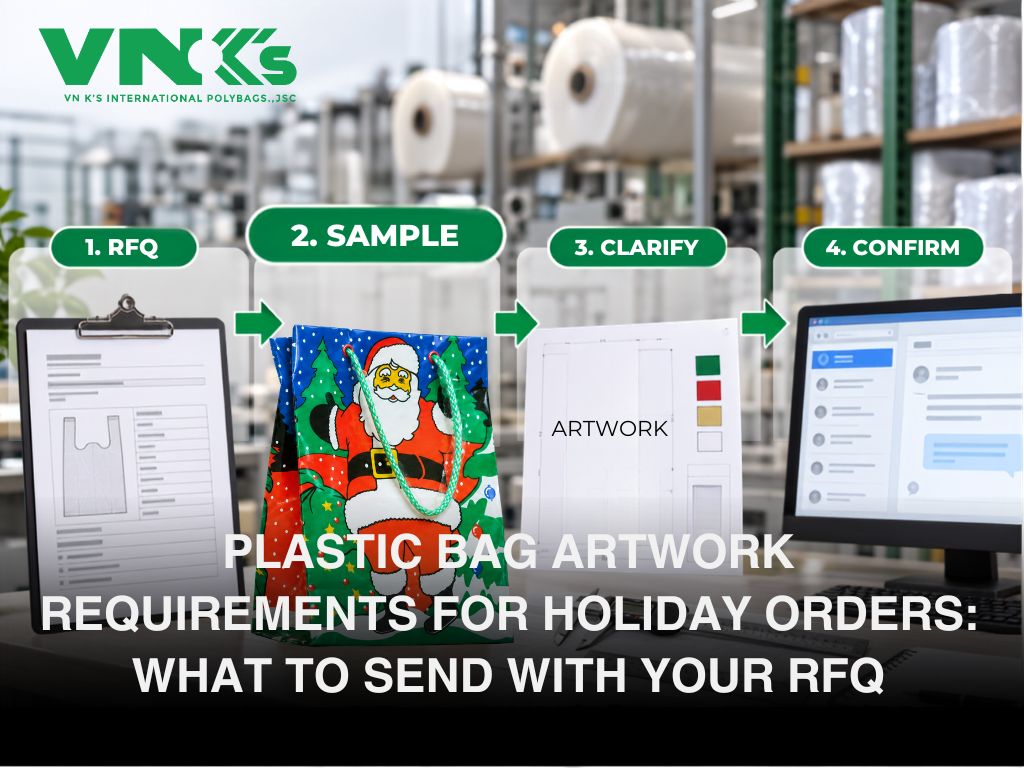
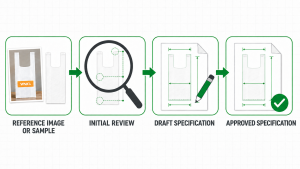
The workflow can follow four steps:
1. The buyer sends basic information, images or a physical sample.
2. VNK’s reviews the material and marks each point as complete, unclear or missing.
3. Both parties discuss the technical and commercial options relevant to the project.
4. The specification and artwork are confirmed under the correct revision before production.
Suppose a buyer sends an enquiry for T-shirt bags with the following information:
– Product: Non-embossed T-shirt bag
– Material direction: HDPE
– Size: Provided in inches and centimeters
– Thickness: Several micron options for different sizes
– Printing: One color
– Packaging: A specified number of bags per inner pack and inner packs per outer bag
– Recycled content: A requested percentage option for review
This is enough for the sales team to begin its review, but it is not yet ready for production. The quotation quantity has not been stated. The dimensional convention must be checked if the bag has gussets. Printing still requires confirmation of the number of printed sides, target color, artwork and position. The packing arrangement also needs to be aligned.
The buyer’s requested recycled content percentage is an input for evaluation, not an automatic conclusion. VNK’s can discuss custom recycled content percentages based on specific project requirements. Buyers only need to provide what they know and clearly mark uncertain details so the sales team can focus on the right questions.
VNK’s is a plastic bag manufacturer in Vietnam with nearly 20 years of industry experience, supporting OEM and custom projects based on specific requirements. You can start with size, thickness, material, printing, packaging and quantity. If the specification is incomplete, include reference images or send a physical sample. Contact VNK’s to have the available information reviewed and identify the points that still require confirmation before production.

The optimal solution for your order at the most competitive price.